

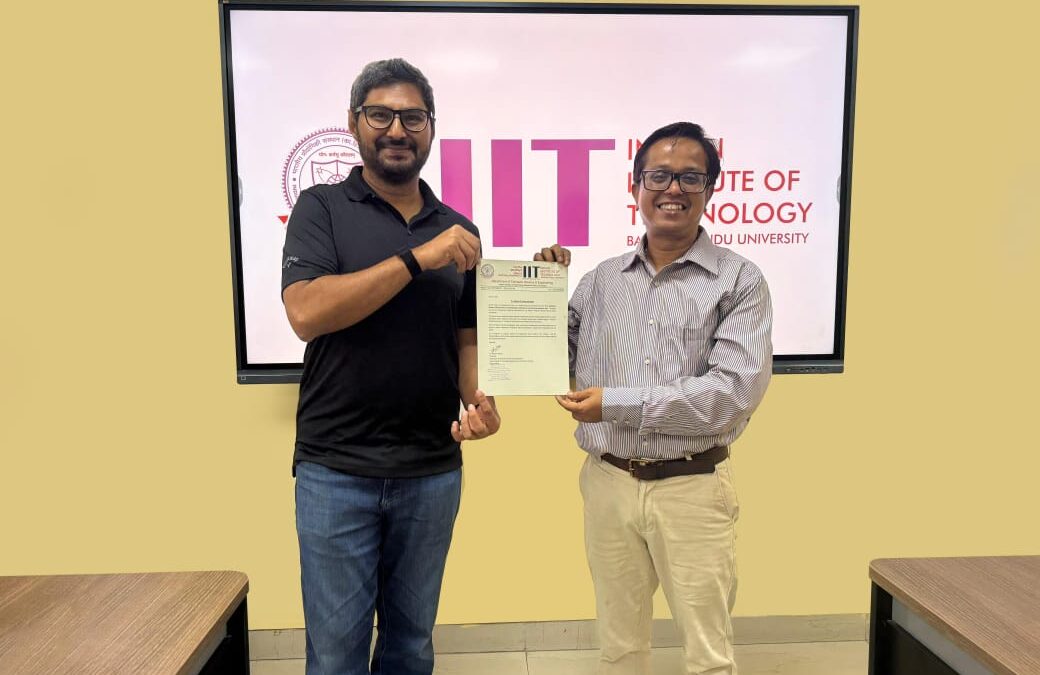
The Indian Institute of Technology (Banaras Hindu University), Varanasi, has affirmed the statistical integrity of Random Number Generators (RNGs) used in online card games operated by RummyCulture, a leading skill-based gaming platform in India. The study, led by Dr. Bhaskar Biswas, Professor and Head of the Department of Computer Science & Engineering at IIT-BHU, employed global testing standards and deep data analytics to scrutinize three months of historical gameplay logs.The concept of RNG is referred more than twice in the on-going arguments in the Gameskraft GST case.
The report, titled “Statistical Review of Randomness in RummyCulture Application using Historical Gameplay Data,” marks the first instance in India’s Real Money Gaming (RMG) industry and among the first globally where an academic institution has independently verified randomness in actual game data from a skill-based platform.
Scientific Methodology Using Global Benchmarks – RNG
The IIT-BHU team applied the Dieharder test suite, a collection of industry-standard statistical tests, widely accepted for evaluating the performance of RNGs. These tests, originally based on the Marsaglia “Diehard” battery and later enhanced by GNU developers, are designed to detect any deviation from true randomness.
Thousands of card distribution sequences from RummyCulture’s platform were analyzed, covering both 53-card (standard) and 106-card (double-deck) game formats. The datasets used were stripped of all Personally Identifiable Information (PII), ensuring complete privacy and data compliance.
According to the report, the RNGs passed 97.34% of all tests for the 53-card format and 98.25% for the 106-card format. The distribution of p-values, a measure used to evaluate the likelihood that a sequence is random, was found to be largely uniform across all datasets, with expected natural variation in edge intervals. This statistical behavior is consistent with what would be expected from a truly random sequence generator.
Tests Conducted
The suite of Dieharder tests employed included:
Birthday Spacing Test – to identify repeated values in samples,
Bitstream and Rank Tests – to validate randomness at the bit level,
Minimum Distance and Parking Lot Tests – to simulate spatial randomness,
DNA and Overlapping Pairs Tests (OPSO/OQSO) – to detect pattern anomalies across sequences.
The report highlights that none of the tests indicated systemic bias, non-uniformity, or predictability factors that would suggest manipulation or technical flaws in the RNG system.
Regulatory and Industry Significance
The results carry considerable regulatory relevance. RNGs in online games of skill must align with international benchmarks like the National Institute of Standards and Technology (NIST) and British Remote Technical Standards (RTS), especially as India’s gaming sector faces increasing scrutiny and calls for standardization.
RummyCulture’s RNG had previously been certified by iTech Labs, an ISO 17025-accredited global testing authority, which validated the unpredictability, uniformity, and non-repeatability of its algorithm outputs. The academic review by IIT-BHU adds another independent and credible layer of validation to these results, a press release said.